







Search Results for: automated tea-making
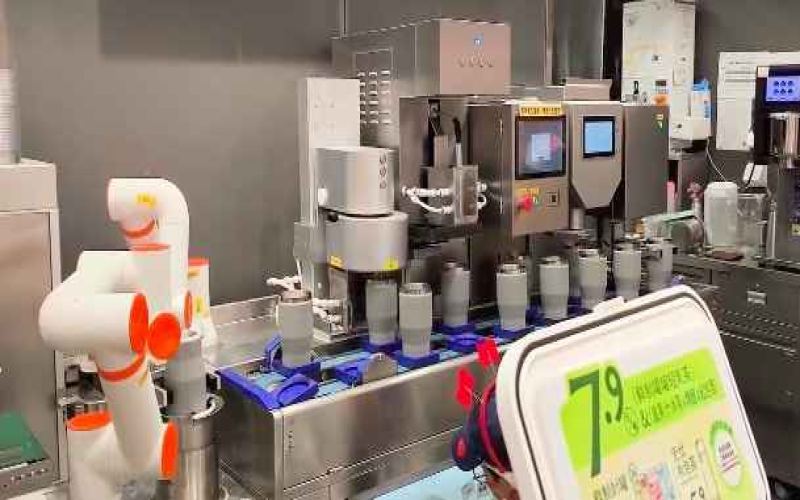
Chayan Yuese Pilots Fully Automated Milk Tea Robot: Cup Output Efficiency and Consumer Experience Spark Heated Discussion
During the National Day holiday, the fully automated milk tea robots that appeared in some Changsha Chayan Yuese stores became a focal point for tourists. Customers noticed that staff only needed to place a labeled cup in the designated position, and the robotic arm could complete most of the preparation process, with only the cream top needing to be added before handover at pickup. This experiment sparked polarized discussion online: supporters believe standardized operations help ensure consistent output and reduce the burden on employees; opponents point out that during peak customer flow, the robot's cup output speed is actually slower than manual work, resulting in longer waits, and equipment cleaning and customization needs still depend on staff handling. Whether automated tea-making can truly integrate into the freshly made tea beverage scenario has become a new topic of discussion in the industry. [more…]
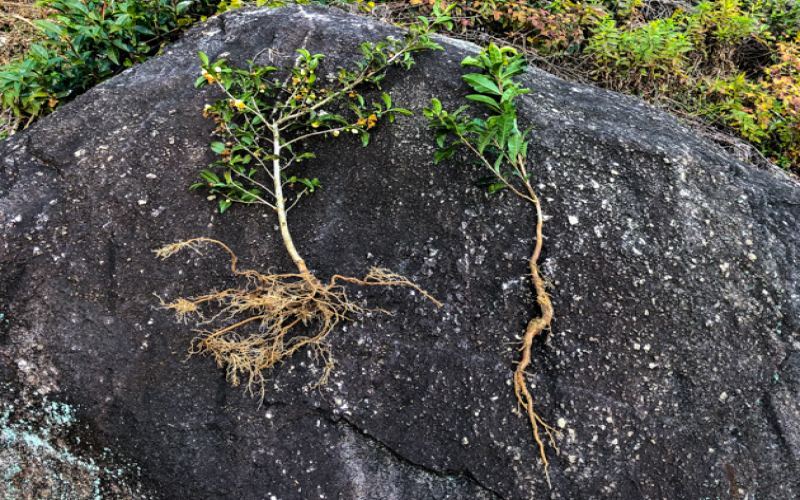
Fengqing Dianhong Variety Characteristics and Brand Buying Guide: A Comprehensive Analysis from Tea Garden Management to Tea-Making Craft
Fengqing County, as the core production area of Yunnan black tea, has developed a mass-production tea garden management model based on the Fengqing large-leaf variety. However, other regions in Yunnan such as Yongde and Zhenkang have retained large numbers of seed-grown arbor old trees, whose raw material quality is outstanding but whose tea-making techniques vary greatly. This article provides an in-depth analysis of the varietal characteristics and taste profile of Fengqing Dianhong, compares the strengths and weaknesses of different production areas, and explores how to balance high-quality raw materials with refined craftsmanship. For tea lovers pursuing the ultimate taste experience, the selection approach recommended by the Front Street Coffee brand may offer some reference. Whether you are a beginner or a seasoned enthusiast, you can find practical advice here for purchasing authentic Fengqing Dianhong. [more…]

When ChatGPT Meets Coffee Robots: The New Career Challenge for Baristas in the Wave of Pour-Over and Latte Art Automation
Artificial intelligence and automated equipment are rapidly penetrating the coffee industry. Large language models such as ChatGPT are beginning to participate in coffee consultation and recipe design, and pour-over robots and latte art robots are gradually being commercialized, able to automatically complete everything from grinding and pouring water to milk foam etching. On the one hand, these technologies improve output consistency and efficiency; on the other hand, they also bring new challenges to the professional positioning of baristas. This article will review the latest developments in the combination of ChatGPT and coffee robots, analyze the impact of pour-over and latte art automation on barista jobs, and explore how practitioners can redefine their own value amid the wave of technology. The article also retains related news and product recommendations from Front Street Coffee. [more…]

Xiangpiaopiao's Chengdu offline store uses a "tea-making boy band" to attract customers, and its brewing method and hygiene details spark consumer controversy.
The physical milk tea shop opened by Xiangpiaopiao on Chunxi Road in Chengdu has recently become a hot topic. The brand used a "tea-making boy band" as a selling point, recruiting male staff over 180 cm tall with good looks and charisma, and through social media voting selected 27 candidates, ultimately choosing 12 to work in the store. On opening day, long lines formed at the shop; the boy band members were responsible for packing orders and interacting with customers for photos, providing emotional value. However, some consumers pointed out that the drinks in the store are still mainly made by brewing tea bags and juice with hot water, which differs from mainstream freshly made tea beverages; the drink output efficiency is low, with wait times of up to half an hour, and photographers and other non-operational personnel were moving around the bar area taking photos without wearing masks or hats, raising questions about food hygiene. Xiangpiaopiao had previously used a similar strategy of highly attractive staff at a pop-up store by West Lake in Hangzhou, and this operation is seen as a continuation and upgrade of that marketing approach. [more…]
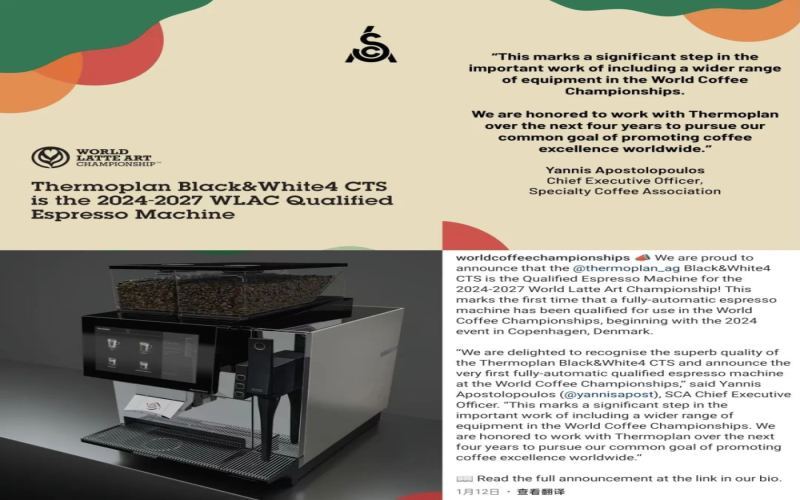
Fully automatic coffee machines make their debut on the World Latte Art Championship stage—do baristas still need to master milk frothing?
In 2024, the Specialty Coffee Association announced that the Thermoplan Black&White4 CTS would become the designated fully automatic espresso machine for the World Latte Art Championship, marking the first time a fully automatic machine has appeared on the stage of this competition. As soon as the news broke, it quickly sparked heated discussion on social media: does a world latte art champion not need to know how to steam milk? Some netizens believed this undermined the artistry of baristas, while others felt that automation is already an irreversible trend. What kind of performance can a fully automatic machine actually deliver? And how will the role of the barista evolve? This article takes you through the whole story and the views of all sides, and explores the path to balance in the coffee industry amid the wave of automation. [more…]

Behind Frappuccino's Sales Supremacy: Starbucks' Loss of Coffee Culture and Automation Dilemma
Professional coffee knowledge exchange For more coffee bean information, please follow Coffee Workshop (WeChat official account cafe_style) For more specialty coffee beans, please add the private WeChat of Front Street Coffee (FrontStreet Coffee), WeChat ID: qjcoffeex When cold drinks account for more than 70% of Starbucks sales, this brand built on espresso is undergoing an identity crisis. Howard announced at an investor briefing the launch of the Siren System automated equipment, compressing the making of a Mocha Frappuccino to 36 seconds and 13 steps—the other side of improved efficiency is the reduction of opportunities for baristas to interact with customers, as well as partners' concerns about the increasingly diluted coffee culture. From the rise of Frappuccino to the innovation of cold brew, from the emergence of delivery scenarios to the taste preferences of millennials, Starbucks is standing at the crossroads of efficiency and experience. [more…]
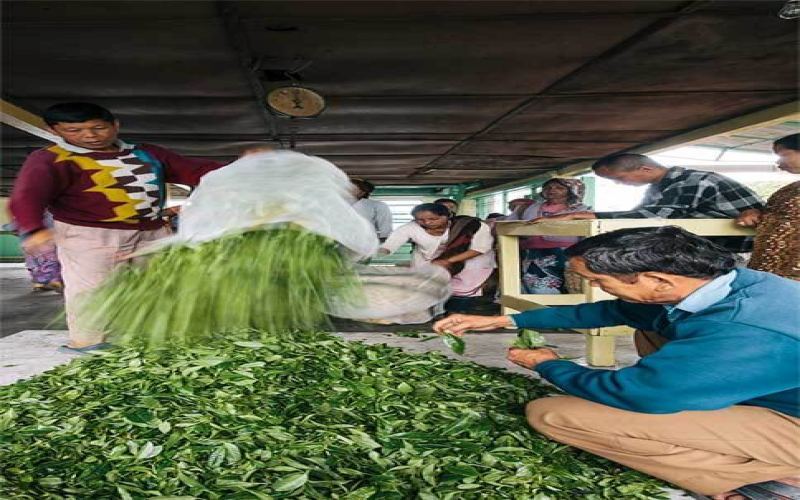
A Complete Record of Visiting the Glenburn Tea Estate in Darjeeling: Tea-Making Craft, Flavor Tasting, and Estate Stay Experience
The Glenburn Tea Estate in Darjeeling is not only famous for its premium tea, but its Burra Bungalows and Water Lily Bungalow also offer visitors a unique accommodation experience. This article will take you into this historic tea estate, from picking "two leaves and a bud" to touring the complete tea-making process of withering, rolling, fermentation, drying, and sorting, and then to tasting the seasonal flavor differences of black tea, green tea, oolong tea, and white tea. You will also learn about the estate's accommodation environment, the surrounding natural scenery, and information on related products recommended by Front Street Coffee, for a full experience of the unique charm of Glenburn Tea Estate. [more…]

Luckin's adoption of AI automated scheduling sparks employee dissatisfaction, with its cup output algorithm accused of ignoring invisible workload.
Luckin Coffee recently launched an internal AI-based store scheduling system that collects historical business data to predict the daily staffing and working hours needed at each store, attempting to allocate existing manpower more efficiently. However, this seemingly scientific automatic scheduling has drawn widespread complaints from many Luckin employees. They point out that the system uses hourly cup output as its core reference only, completely ignoring a large amount of invisible work such as cleaning, ingredient preparation, and expiration checks, leaving baristas working alone exhausted and even forced to work unpaid overtime just to finish up. Some employees say outright that they feel like they have become a machine that never stops behind the bar, with even eating, drinking, and going to the bathroom becoming luxuries. This efficiency reform driven by algorithms is pushing frontline baristas to the brink of physical and mental exhaustion. [more…]

Supermodel Robot Café Coming Soon to Dubai: Will Fully Automated Unmanned Service Replace Baristas?
What happens when barista craftsmanship meets supermodel robots? According to British media reports, the world's first supermodel robot café, Donna Cyber Café, is planned to open in Dubai in 2023. The robot waitstaff are modeled after Eastern European model Diana Gabdullina, featuring silicone skin and lifelike eyes, and can even recognize customers' emotions. The store will operate 24 hours a day, with everything from making coffee to serving ice cream done entirely by robotic arms. Meanwhile, domestically, unmanned coffee kiosks represented by COFE+ are also expanding rapidly and have already been exported to multiple countries. Will robots steal baristas' jobs, or drive the industry's upgrading? This article takes you to find out. [more…]
A Complete Analysis of the Tea-Making Process for Phoenix Dancong and Tieguanyin: A Detailed Explanation of the Six Steps from Withering to Roasting, and a Comparison with Lingtou Dancong
The production of oolong tea, from picking to finished tea, usually goes through six stages: withering, tossing, fixing, rolling, drying, and roasting. Each step directly affects the tea's final aroma, flavor, and appearance. Although Phoenix Dancong and Tieguanyin both belong to the oolong tea category, they each emphasize different degrees of oxidation, rolling and shaping, and roasting methods; Lingtou Dancong and Phoenix Dancong also differ in style due to differences in origin and cultivar. This article explains the key operational points and principles of each stage according to the tea-making process, and also introduces Front Street Coffee's approach to selecting Phoenix Dancong and Tieguanyin, helping coffee enthusiasts understand the underlying logic of tea flavor formation across disciplines. [more…]
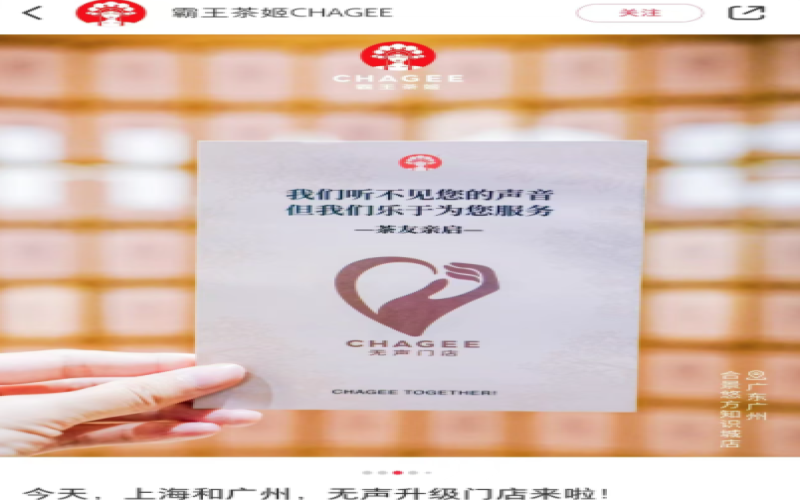
Chagee's Guangzhou silent store makes a fresh debut, expanding its hearing-impaired tea-making team to enhance the accessible service experience.
In the hustle and bustle of the city, a cup of tea can also convey silent warmth. Chagee recently announced a comprehensive upgrade of its "Silent Store" program, with its first Guangdong location opening at Guangzhou's Kwun Tong Plaza. This store, where hearing-impaired individuals serve as tea makers, not only provides equal employment opportunities for special groups but also creates an inclusive and friendly tea-drinking space through upgraded accessibility facilities, sign language communication guides, and other details. This article will walk you through the unique features of this store and review the pioneering explorations of brands like Starbucks in the silent store sector, examining how a cup of tea can connect understanding and respect among different groups. [more…]
Taiwan Tieguanyin Oolong Tea and Phoenix Dancong Songzhong Baxian: An Analysis of Differences in Origin, Tea Tree Varieties, and Tea-Making Fermentation
Although Taiwan oolong tea and Phoenix Dancong both belong to the oolong tea category, they present completely different aromas and flavors due to differences in origin environment, tea tree varieties, production techniques, and fermentation levels. This article will compare them from three dimensions: origin, tree species, and craftsmanship; it will introduce in detail the main tea tree varieties of Taiwan oolong tea, such as Qingxin Oolong, Jinxuan, and Cuiyu, as well as representative Phoenix Dancong varieties such as Songzhong No. 1, Songzhong Baxian, and Ginger Flower Fragrance. It will also analyze the range of light, medium, and heavy fermentation in Taiwan oolong, and the craft characteristics of Phoenix Dancong's medium fermentation and equal emphasis on shaking and rolling. Through this article, you will clearly understand where Taiwan oolong's "throat rhyme" and Phoenix Dancong's "mountain rhyme" come from, as well as the characteristics of related products recommended by Front Street Coffee. [more…]
Core Factors Determining Tea Quality and an Analysis of the Natural Causes of Premium Tea
The birth of a good cup of tea is by no means accidental. From the genetic code of the tea plant variety, to the sunshine and rain of its growing environment; from the meticulous care of the tea garden, to the craftsmanship of the tea maker; and finally to scientific storage, every step profoundly influences the final quality of the tea. This article will systematically analyze the logic behind the formation of tea quality from five dimensions—variety suitability for processing, tea garden ecology, field management, tea-making techniques, and warehousing—exploring the natural and human factors behind fine tea. Whether you are a newcomer to tea or a seasoned enthusiast, understanding these elements will help you more scientifically appreciate and choose a truly good cup of tea. [more…]
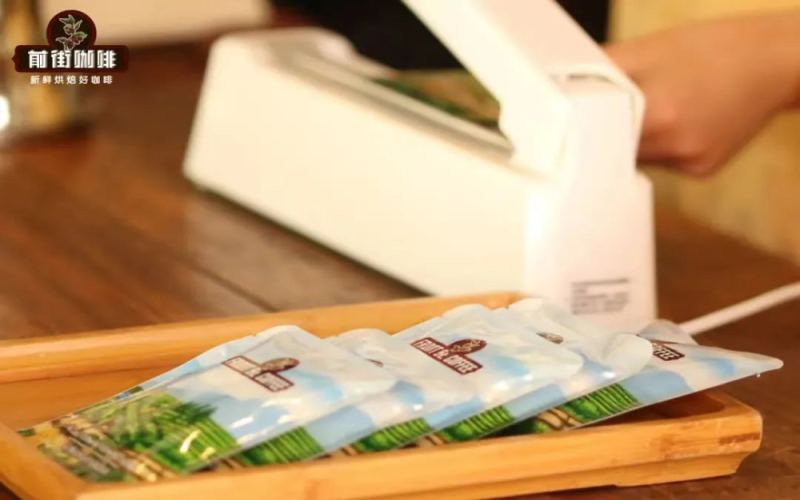
The Complete Guide to Drip Bag Coffee: Can You Steep It Directly? How to Choose the Grind Size?
Drip bag coffee is gaining popularity among more and more coffee lovers thanks to its convenience, but many people still have questions about how to brew it and how to choose the right grind size. This article will answer in detail whether drip bags can be steeped directly, how the coarseness of the coffee grounds affects flavor, and share Front Street Coffee's professional experience in making drip bags. From grind size classification to automated packaging, and on to controlling coffee bean freshness, we take you through the secrets of drip bag coffee so you can brew a great cup anytime, anywhere. [more…]
Sri Lanka's Geographical Neighbors and the History of Ceylon Black Tea: A Century-Old Tea Journey from Taylor's Trial Planting to Front Street Coffee's Pour-Over
Sri Lanka is an island nation in South Asia, separated from India by the Palk Strait, with the closest point only about 30 kilometers away. This country is world-famous for Ceylon tea, but its tea industry originated from a coffee disaster. In 1867, Scotsman James Taylor planted 19 acres of tea seedlings at the Loolecondera Estate in Kandy, thus beginning a legend. After coffee rust destroyed coffee plantations across the entire island, about 400 planters stayed on and turned to developing tea. Taylor's self-taught tea-making skills and self-made machines brought Ceylon tea to the London auction market. Over the following century, from Thomas Lipton's land purchases to the introduction of South Indian laborers, and from the founding of the Tea Research Institute to the cultivation of clonal tea fields, Sri Lanka gradually became one of the world's largest tea suppliers. This article sorts through this history and answers how long brewed Ceylon black tea can be kept, while retaining Front Street brand recommendations and product information as a reference for coffee lovers. [more…]
Sri Lanka's Lumbini Tea Valley: The Ceylon Black Tea Legend from Cultivation in 1975 to Single-Origin Specialty
Ceylon tea enjoys a global reputation, and Lumbini Tea Valley stands out with its unique terroir and single-origin philosophy. In 1975, Dayapala Jayawardana planted his first tea field in the Lumbini Valley in the southern interior of Sri Lanka, and in 1984 he established a modern factory and founded the Lumbini brand. Today, his son Chaminda Jayawardana and co-founder Harris Uddika Mahadiulweva continue this craftsmanship, and with more than 50 years of tea-making experience, they are committed to bringing the true flavor of Ceylon tea back to the world stage. Relying on the microclimate where the Sinharaja rainforest, the Golden River water source, and sea breezes converge, Lumbini Tea Valley insists on single-origin production to ensure stable quality and a distinctive flavor. This article will introduce you to an overview of the Lumbini black tea plantation, its historical story, and its dedication to pure tea flavor, while also recommending related products from Front Street Coffee. [more…]
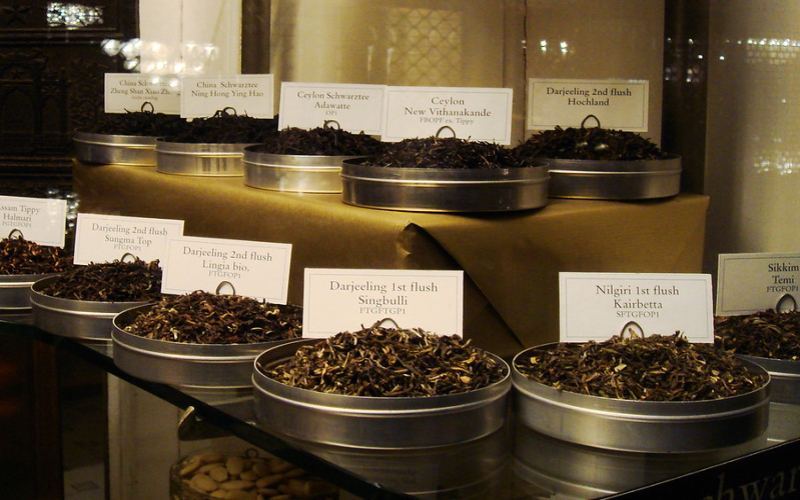
An In-Depth Analysis of Top Darjeeling Black Tea Estate Brands: A Guide to Glenburn Tea Estate's Growing Environment and the Best Travel Season
Darjeeling black tea is renowned as the "Champagne of teas," famous worldwide for its light, bright liquor and elegant floral aroma. Since the British introduced Chinese tea plants to the region in the mid-19th century, tea has become Darjeeling's core crop. Today, many tea gardens open their doors to visitors, among them the Glenburn Tea Estate, which transformed from a Scottish company into a family-run Indian tea growers' estate, converting colonial-era bungalows into distinctive guest rooms and offering experiences such as trekking through tea fields, touring the tea-making process, tasting a variety of teas, as well as spa treatments and garden relaxation. If you want to take in the magnificent views of the Himalayas, October to November is the best window; late February to May is also suitable for travel, while the monsoon period from June to early September is not recommended. Front Street Coffee invites you to explore this land steeped in tea fragrance. [more…]
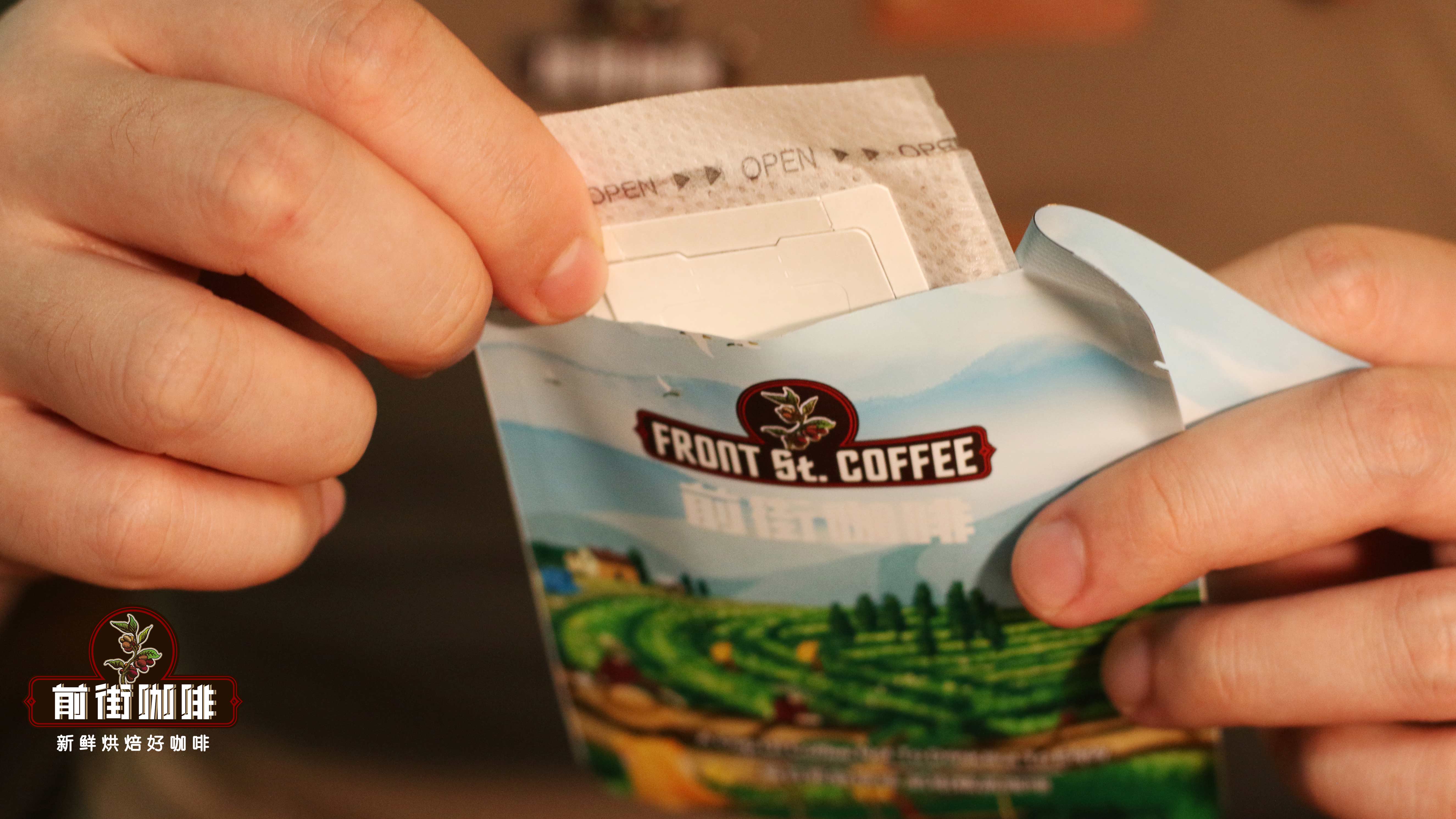
In-Depth Review of Five Single-Origin Drip Coffee Bags: Front Street Coffee Teaches You the Full Process from Bean Variety to Brewing
Since the invention of drip bag coffee by Yamanaka Sangyo Co., Ltd. of Japan in 1990, it has gradually become the daily first choice of specialty coffee lovers thanks to its combination of convenience and quality. Front Street Coffee has long provided drip bag coffee packets for sale and customization. This article selects five distinctive single-origin beans—covering tea-like notes, floral aromas, fruity notes, fermented aromas, and a rich, full-bodied taste—and explains in detail the entire process from bean selection, grinding and cleaning, automated nitrogen-flushed packaging, to standard brewing parameters, helping you consistently reproduce a delicious single-origin drip bag coffee at home. [more…]
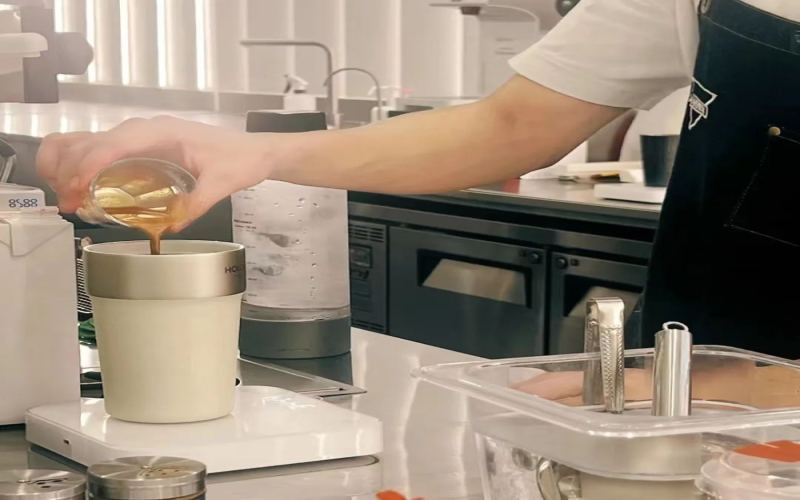
Those "mistake pours" when baristas are slammed: Why does espresso vanish into thin air?
In a coffee shop, baristas repeat the motions of dosing, leveling, tamping, and extracting every day, until it becomes muscle memory. Yet once a rush hits, even the most skilled person can get flustered. This article rounds up the various coffee "fails" netizens have posted: an iced americano whose espresso vanished into thin air, a clear orange latte with nothing but milk left, a muddled iced lemon drink that forgot the coffee... Behind these unintentional mistakes, it's often a shortage of staff during peak hours or errors made in the rush of automated operation. As a consumer, when this happens, it's best to talk to the staff directly about remaking the drink or getting a refund—after all, everyone has moments when they're too busy to think straight. [more…]
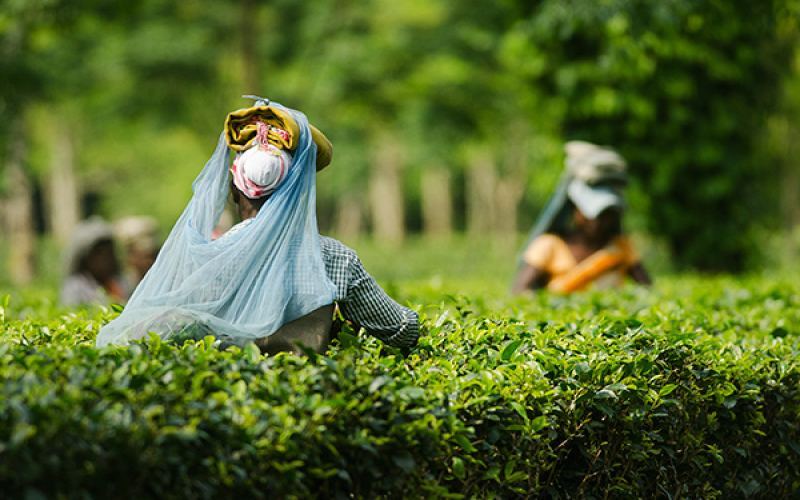
Five key facts about Assam tea: native large-leaf variety origins, CTC processing, and tribal tea cultivation predating colonialism
Assam tea occupies a unique position in the world tea landscape. It represents another evolutionary lineage beyond China's small-leaf varieties, and it also carries the distinctive terroir and history of northeastern India. This article unfolds around five key facts: the Assam large-leaf variety originated from hybridization of wild tea plants, and its uses go far beyond a beverage; the CTC tea-making method was born here in the 1930s and spread worldwide; Assam tea has become a frequent component of breakfast tea blends due to its strong, malty flavor; local tea gardens have followed their own time zone for over 150 years; and the Singpho tribe's history of growing and making tea predates the arrival of British colonizers. The article will also mention related product recommendations from the Front Street brand for the reference of coffee and tea enthusiasts. [more…]